
News

Geo Energy to acquire 51% stake in two Indonesian shipping companies for USD 127.5 million
01 Sep 2025
Geo Energy Resources, a Singapore-listed Indonesian coal producer, is set to acquire 51 percent stakes in Trans Maritim Pratama and Bahari Segara Maritim for a total of USD 127.5 million. The deal, announced on August 27, aims to diversify Geo Energy’s business into logistics and infrastructure while strengthening its asset base for future earnings.
The two shipping companies operate 54 vessels—27 tugboats and 27 barges, including new deliveries scheduled for FY2025—with transport capacities ranging from 5,000 to 10,000 tonnes. With nearly a decade of experience, they provide logistics for coal and other commodities across Indonesia. Their fleets will directly support Geo Energy’s Triaryani coal mine and Marga Bara Jaya jetty operations, improving delivery reliability and reducing transport costs.
The acquisition structure includes USD 23.5 million in cash, around USD 18 million in receivables, and the issuance of 275 million new Geo Energy shares valued at about USD 86 million. Shares will be priced at SGD 0.40, representing a 13 percent premium over the three-month average.
Geo Energy, founded in 2008 and listed on the SGX mainboard since 2012, has built its reputation as a low-cost coal producer. The proposed acquisition, classified as a major transaction, will require share- holder approval at an extraordinary general meeting.
By expanding into shipping and logistics, the group seeks to secure operational efficiency, broaden revenue streams, and reinforce its long-term growth strategy amid evolving market conditions.
Source : https://www.businesstimes.com.sg

China economy to top USD 19.5 trillion this year
15 Aug 2025
China’s economy is set to surpass USD 19.5 trillion in 2025, or over 140 trillion yuan, as it completes its 14th five-year plan. Despite ongoing trade tensions with the U.S. and deflationary pressures, the country’s top planner reported that achievements during the 2021–2025 plan have exceeded expectations.
Zheng Shanjie, head of the National Development and Reform Commission, highlighted growth in areas like technological innovation, green initiatives, and living standards. While the 2021 plan dropped a specific GDP target, China maintained annual goals, aiming for about 5% in 2025. From 2021 to 2024, growth averaged 5.4% despite COVID-19 challenges.
Zheng also stressed China’s strong manufacturing and supply chains as key assets in managing global uncertainty. He asserted that foreign tech restrictions would only enhance China’s self-reliance and innovation.
No details were provided about the upcoming 15th five-year plan, but advisers are urging a focus on boosting household contributions to growth, as policymakers prepare strategies through 2030.
Source : https://www.reuters.com/markets/asia/china-economy-exceed-195-trillion-this-year-says-state-planner-2025-07-09/

Indonesia Sets Sights on Expanding SEZs and Cutting Logistics Costs to Boost Growth
15 Aug 2025
Indonesia is taking steps to strengthen its economic position by expanding Special Economic Zones (SEZs) and overhauling logistics infrastructure. Currently, it has 24 SEZs covering just 21,000 hectares—far behind Vietnam’s 1.6 million hectares, Malaysia’s 2.15 million, and Thailand’s 622,000.
Chief Economic Minister Airlangga Hartarto noted that this limited SEZ footprint contributes to inefficiencies, including a high Incremental Capital Output Ratio (ICOR) of 6 and logistics costs at around 12 percent of GDP. To improve competitiveness, the government aims to lower logistics costs to 8 percent by 2035.
Airlangga acknowledged the ambitious goal might not be achieved without major regulatory reforms and stronger investment in SEZ infrastructure. He emphasized the need for deregulation, better spatial planning, and supportive policies to attract more private investment.
These reforms are expected to reduce the ICOR and stimulate more efficient, high-quality economic growth in the years ahead.
Source : https://jakartaglobe.id/business/indonesia-lags-behind-asean-neighbors-in-sez-coverage-eyes-logistic-cost-reform

Indonesia books USD 27.9 billion investment in first semester 2025
01 Aug 2025
Indonesia recorded a robust investment performance in the first half of 2025, securing Rp477.7 trillion (USD 31.5 billion), a significant 11.5 percent increase from the same period last year. This includes USD 27.9 billion in investment as of the previous year, according to Minister of Investment Rosan Perkasa Roeslani. He expressed confidence in the country’s investment climate despite global uncertainties, citing the achievement as evidence of continued trust in Indonesia’s economy.
The investment boom led to the creation of over 665,000 new jobs, with domestic investment contributing Rp275.5 trillion (USD 18 billion). Notably, more than half of the total investment—around 50.3 percent—was directed to regions outside Java, showing progress in decentralizing economic growth.
Key sectors include basic metals and transportation equipment, though there is growing momentum toward renewable energy. The government has committed to reaching net-zero emissions by 2060, targeting nearly Rp3,700 trillion (USD 241 billion) in green energy investment, particularly geothermal projects in Sumatra and Java.
Foreign direct investment remains strong, led by Singapore, Hong Kong, China, the United States, and Malaysia. Singapore continues its decade-long streak as Indonesia’s top investor, maintaining a dominant position across multiple sectors.
Roeslani highlighted the government’s strategic push toward energy development and regional equity as key factors in Indonesia’s investment resilience and appeal to global and domestic investors alike.

Indonesia Sees Greater Export Opportunity in Europe Than the U.S.
01 Aug 2025
Trade Minister Budi Santoso believes that the European Union presents a more promising export market for Indonesia than the United States. He cited the sheer size of the EU’s import demand, which in 2024 reached USD 6.6 trillion—double the USD 3.3 trillion of U.S. imports. This, he said, offers a significant alternative for Indonesia’s export expansion.
According to Budi, tapping further into the EU market could provide Indonesia with a strategic advantage, particularly as the country seeks to diversify its trade partnerships. With the ongoing finalization of the Indonesia-European Union Comprehensive Economic Partnership Agreement (IEU-CEPA), Indonesia is positioning itself to gain greater market access in Europe.
President Prabowo Subianto’s recent meeting with European Commission President Ursula von der Leyen in Brussels underscores the high-level commitment to this trade pact. Trade between Indonesia and the EU has already grown to USD 30.1 billion in 2024, with Indonesia enjoying a rising surplus—USD 4.5 billion compared to USD 2.5 billion in 2023.
Indonesia’s key exports to the EU include palm oil and its derivatives, copper ore, oleochemicals, footwear, coconut cake, steel, cocoa butter, copra, rubber products, and machinery. Independent studies forecast that IEU-CEPA could boost Indonesia’s GDP by 0.19%, raise national income by USD 2.8 billion, and increase exports by nearly 58% within three years.
Source : https://finance.detik.com/berita-ekonomi-bisnis/d-8009026/ri-punya-peluang-lebih-besar-ekspor-ke-eropa-dibanding-as-ini-alasannya

Indonesia and EU Seal Landmark Free Trade Deal with Zero Tariffs
15 Jul 2025
Indonesia and the European Union have finalized the Comprehensive Economic Partnership Agreement (CEPA), effectively eliminating trade tariffs between the two regions. President Prabowo Subianto hailed the agreement as a major breakthrough, calling it a strategic move to expand Indonesia’s global trade network during a time of global uncertainty.
Speaking in Brussels on July 13, Prabowo emphasized the importance of the European Union as a vast and economically powerful market, with over 460 million consumers and a high GDP. The CEPA will grant Indonesian exports—ranging from agriculture and automotive to services and raw materials—unprecedented access to the EU market.
European Commission President Ursula von der Leyen called Indonesia a key global supplier for Europe’s digital and green transitions. She stressed that Indonesian exports under CEPA must meet safety, social, and environmental standards. Von der Leyen also mentioned future benefits such as simplified Schengen visa access for Indonesian citizens.
While the agreement is complete, formal signing and ratification may still take some time. Nevertheless, both leaders underscored its significance for strengthening economic ties and diversifying trade amid shifting global dynamics.
How Indonesia Became the World’s Nickel Powerhouse
15 Jul 2025
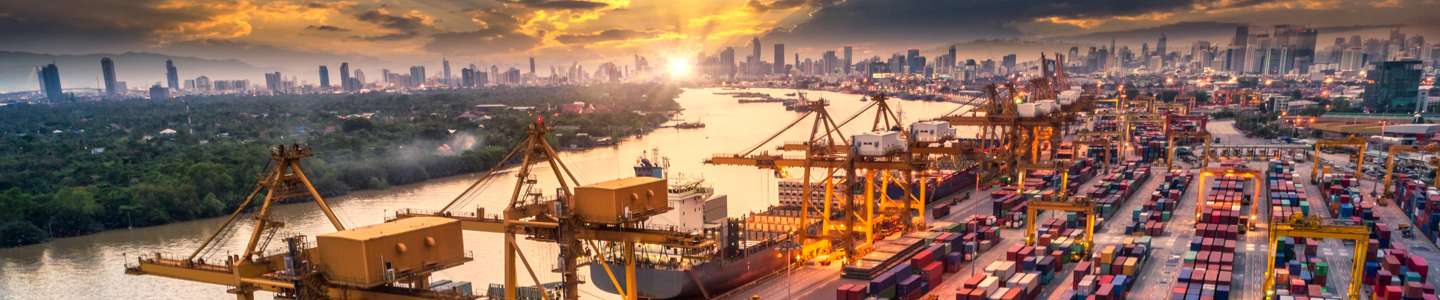
Indonesia now dominates global nickel production, accounting for nearly 60% of the world’s supply in 2024 and expected to reach 64% in 2025. This transformation began with a bold industrial policy shift starting in 2009, including a ban on raw ore exports, a push for value-added processing, and the requirement for foreign companies to divest to state-owned entities. The strategy, while controversial, spurred investment in smelters, grew export revenues from USD 1 billion to USD 20 billion, and positioned Indonesia as a critical player in the electric vehicle battery supply chain.
Source : https://valorinternational.globo.com/business/news/2025/07/09/how-indonesia-became-the-worlds-nickel-powerhouse.ghtml
Indonesia on Track to Become World’s Next Aluminum Leader
15 Jul 2025
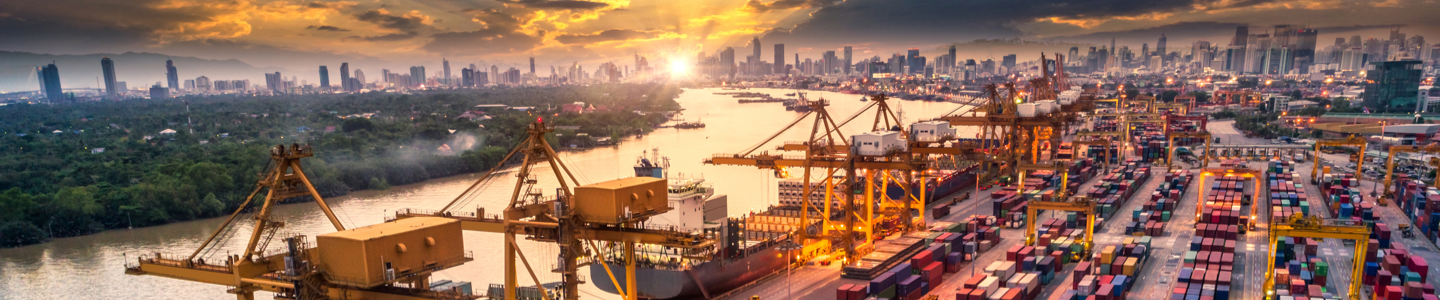
Chinese industrialists are investing billions into Indonesia’s aluminum industry, mirroring their earlier push into nickel. Major players like Tsingshan Holding Group, China Hongqiao, and Shandong Nanshan Aluminum are building new smelters and refineries, with Goldman Sachs predicting Indonesia’s aluminum production could grow five-fold by 2030.
This surge in development is supported by Indonesia’s cheap labor and coal power, making it an attractive alternative amid China’s own domestic production limits.